
Bridging the Gap: Mastering the Standard #28 Preparation on the Phantom Head
In the realm of preclinical dental education, the transition from theoretical knowledge to tactile proficiency is a profound leap. Nowhere is this more evident than in the phantom head laboratory. Here, students confront the “standard tooth preparation”—specifically the preparation of tooth #28 (FDI notation), the mandibular right first molar. This tooth serves as the quintessential canvas for mastering occlusal anatomy, retention form, and the delicate balance between tissue preservation and structural integrity. Educators often emphasize that proficiency on the phantom head is not just about drilling; it is about developing an internal “visual-tactile” feedback loop that eventually translates to live patient care. This post explores the academic nuances of training with a standard #28 model, the integration of aesthetic composite restoration, and the technical armamentarium required for excellence.
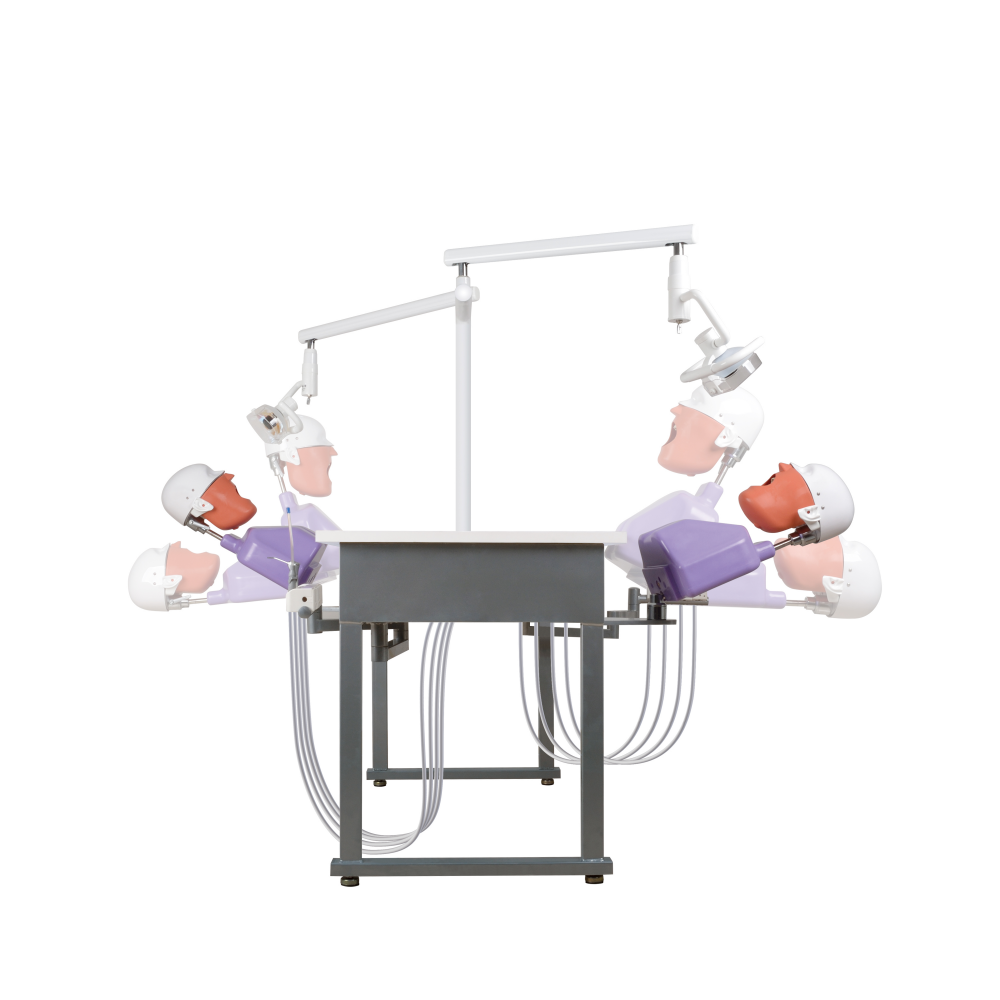
Tooth #28 is often the chosen archetype for evaluating preclinical competence. Its complex occlusal surface, featuring mesial, distal, and central fossae, oblique ridges, and two distinct roots (mesial and distal), challenges the student to maintain bur orientation while navigating diverse surface inclinations.
The educational objective extends beyond simply creating a cavity. The “standard” implies a set of rigorous criteria: parallel mesial and distal walls, a specific pulpal floor depth (typically 1.5mm to 2mm in dentin for a Class I composite), and distinct cavosurface margins. On a phantom head, the lack of patient feedback (pain or movement) shifts the focus entirely to visual inspection and tactile sensitivity. Students must learn to recognize the “give” of the bur as it transitions from enamel to dentin, a skill that is foundational for preventing iatrogenic pulp exposure in future clinical practice.
Modern dental curricula have largely moved away fromGV Black’s extension for prevention principles, shifting toward minimally invasive aesthetic composite restorations. When restoring #28, the exercise is no longer just about placing a filling; it is about mimicking nature.
The preparation for a composite restoration differs significantly from that of an amalgam. Students are taught to preserve the marginal ridge and utilize beveled cavosurface margins. This increases the surface area for enamel etching and allows for a seamless transition of composite layers, masking the interface between tooth and restoration. The challenge in the phantom lab is achieving a polished, anatomical correct final restoration that blends with the typodont tooth, often requiring the mastery of layering techniques to simulate translucency and opacity.
Effective preparation relies on the seamless integration of rotary instruments. In the preclinical workflow, the practitioner oscillates between high-speed and low-speed handpieces. The high-speed handpiece, equipped with a water spray, is utilized for bulk removal of tooth structure and defining the external outline of the cavity with high efficiency and minimal thermal trauma. Conversely, the low-speed handpiece is employed for finer detailing, refining internal line angles, and finishing the preparation margins with precision, ensuring the surface is smooth and ready for bonding procedures.
In aesthetic dentistry, the selection of FG (Friction Grip) diamond burs is critical. Unlike carbide burs, which cut by gouging, diamond burs cut by abrasion, offering superior control and smoother finishes required for composite margins.
Common FG Diamond Bur Models for #28 Preparation:
To achieve the precision required for aesthetic work on a phantom head, the quality of the handpiece is paramount. The handpiece must offer concentricity and adequate illumination to visualize the deep, narrow fissures of a molar.
Clinical Recommendations for Phantom Head Practice:
| Feature | Recommendation | Rationale for Education/Practice |
|---|---|---|
| High-Speed Handpiece | Mini/Standard Head, LED, Water Spray | A mini head improves visibility in the posterior region (phantom head mimics the restricted oral opening). LED light is non-negotiable for accurate shade matching and margin evaluation. |
| Low-Speed Handpiece | Straight Handpiece (Contra-Angle optional) | For #28, a straight handpiece often offers better tactile feedback and control for refining occlusal depths compared to a contra-angle, though modern electric motors offer excellent slow-speed control. |
| Bur Shank | FG (Friction Grip) | Standard for high-speed; ensures the bur is held securely, reducing “wobble” which leads to over-preparation. |
The following table summarizes the application of specific burs during the aesthetic restoration of tooth #28.
| Procedure Phase | Bur Type/Model (FG) | Function in #28 Restoration |
|---|---|---|
| Initial Access & Depth | Round Diamond (FG 6845KR) | Initial penetration; creating rounded internal line angles to reduce stress concentrations in the composite. |
| Outline Form | Tapered Fissure (FG 6847KR) | Establishing the occlusal depth and diverging walls. The diamond grit allows for smooth cutting, preventing chipping of the enamel margins. |
| Finishing Margins | Flame/Needle (FG 856 / 169L) | Creating a shallow bevel on the enamel cavosurface margin. This is critical for the acid etch technique in aesthetic bonding. |
| Occlusal Anatomy | Wheel (FG 8847) | Recreating developmental grooves in the composite material before final polishing. |
Mastering the standard #28 preparation on a phantom head is a rigorous exercise in discipline and manual dexterity. It is the bridge between the classroom theory of cavity design and the clinical reality of aesthetic dentistry. By understanding the distinct roles of high and low-speed handpieces and utilizing the correct FG diamond burs, dental students can refine their technique to produce restorations that are not only structurally sound but aesthetically indistinguishable from natural dentition. As we advance in dental education, the phantom head remains an indispensable arena for honing these critical skills before a real patient ever sits in the chair.